
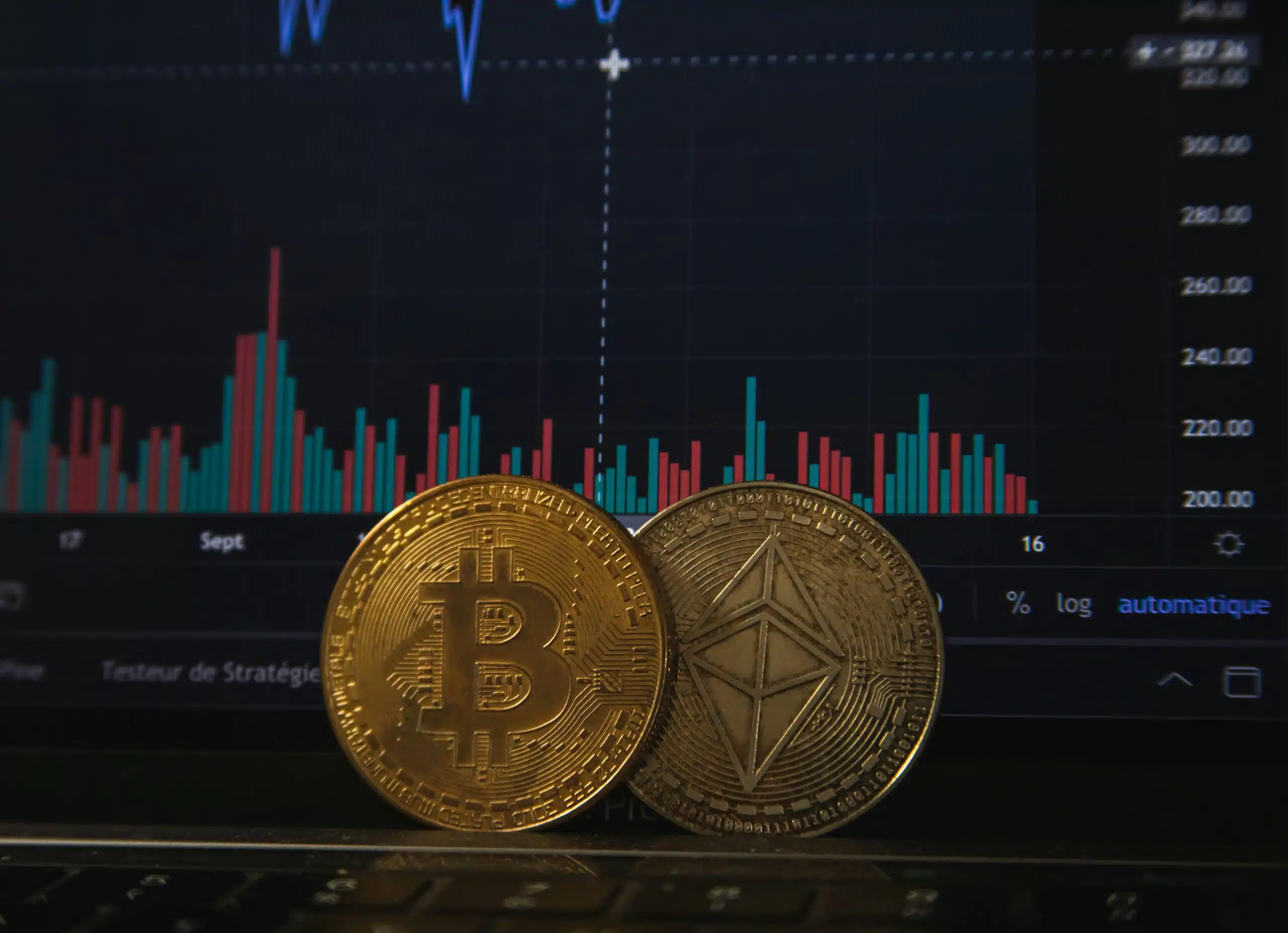
Congratulations. You've just found the most comprehensive investing & crypto for beginners resource that's actually designed for real people with real questions, real fears, and real budgets. Whether you're staring at your bank account wondering "how much money do I need to start investing in stocks" or you're terrified that crypto is just a giant scam, you're in exactly the right place.
Let's be honest: most investing advice is either written by Wall Street insiders who assume you understand terms like "dollar-cost averaging" and "asset allocation," or it's generic fluff that tells you to "just buy index funds" without explaining why or how. That's not good enough. Not when your financial future is on the line.
This investing & crypto for beginners category is different. Here, we treat you like the intelligent, capable person you are—but we also recognize that you're starting from zero. No stupid questions. No judgment. Just actionable, step-by-step guidance that takes you from "I know nothing" to "I'm confidently building wealth" in months, not years.
- Why Investing & Crypto Matter More Than Ever in Century XXI
- Part 1: Stock Market Investing for Absolute Beginners
- Best Investment Apps for Beginners: Real-World Testing
- How to start investing in crypto for beginners
- Stocks vs ETFs vs Index Funds for Beginners: The Ultimate Comparison
- How to Invest in Stocks with Little Money (The Realistic Guide)
- Dollar-Cost Averaging for Beginners: Your Secret Weapon
- Part 2: Cryptocurrency Investing for Absolute Beginners
- How Much Money Do You Need to Start Investing in Cryptocurrency?
- How to Store Crypto Safely: Hot Wallets vs Cold Wallets
- Dollar-Cost Averaging Crypto: Why It's Essential
- Bitcoin vs Ethereum for Beginners: Which Should You Buy First?
- Part 3: Choosing Your Investment Approach
- How to Choose the Right Brokerage Account
- Setting Up Your First Investment Account: The 15-Minute Process
- Part 4: Common Beginner Mistakes (And How to Avoid Them)
Why Investing & Crypto Matter More Than Ever in Century XXI
The old rules of money are broken. Keeping your cash in a savings account earning 0.01% interest isn't just suboptimal—it's financial suicide by inflation. Meanwhile, the wealth gap between investors and non-investors is widening at an alarming rate.
Consider this: Since 1990, the S&P 500 has returned an average of 10.5% annually. If you had invested just $100 per month since then, you'd have over $300,000 today. If you kept that same $100 in a savings account, you'd have... about $36,000. That's a $264,000 difference from simply understanding basic investing principles.
And crypto? While volatile, Bitcoin has outperformed every major asset class over the last decade, turning $1,000 invested in 2013 into over $300,000 despite multiple "crashes." The question isn't whether you should invest—it's whether you can afford not to.
But here's the thing: jumping in blindly is how beginners lose money. You need a systematic approach that minimizes risk while maximizing learning. That's exactly what this category delivers.
Part 1: Stock Market Investing for Absolute Beginners
How to Start Investing in Stocks for Beginners Step by Step
If you're searching for how to start investing in stocks for beginners step by step, you're already ahead of 90% of people who never bother to research before diving in. Let's break this down into digestible, actionable phases.
Step 1: Understand What You're Actually Buying
When you buy a stock, you're purchasing a tiny ownership stake in a real company. When Apple sells 200 million iPhones, you get a microscopic slice of that profit. When Tesla delivers more cars, your piece of the pie grows. This fundamental understanding is crucial—stocks aren't lottery tickets; they're ownership certificates.
Step 2: Determine Your Starting Amount
The most common question we hear is "how much money do I need to start investing in stocks?" The answer might surprise you: as little as $1. Thanks to fractional shares, you can own a piece of Amazon for $5 instead of needing $3,000 for a full share.
Practical starting points:
- $50-100: Perfect for learning the mechanics without stress
- $250-500: Enough to diversify across 3-5 different investments
- $1,000+: Serious beginner territory where you can build a solid foundation
The key is starting with an amount that feels significant enough to care about but not so large that you'll panic if it drops 20% in a market downturn.
Step 3: Choose Your Investment Vehicle
For beginners, you have three main paths:
Path A: Robo-Advisor (Easiest)
Platforms like Betterment, Wealthfront, or Fidelity Go ask about your goals and risk tolerance, then build and manage a diversified portfolio automatically. It's like having a financial advisor for 0.25% annual fee instead of 1-2%.
Path B: Target-Date Index Funds (Simple)
These funds automatically adjust from aggressive (more stocks) to conservative (more bonds) as you approach retirement. Just pick the year closest to when you'll turn 65 and keep adding money.
Path C: DIY Index Fund Portfolio (Most Control)
Build your own portfolio of 3-5 index funds covering US stocks, international stocks, and bonds. Requires more learning but gives you complete control and the lowest fees.
Best Investment Apps for Beginners: Real-World Testing
We've tested dozens of platforms to find the best investment apps for beginners. Here's what actually matters:
Fidelity: Best overall for beginners. Zero fees, fractional shares, excellent research tools, and 24/7 phone support when you get confused. You can buy stocks, ETFs, and even crypto through their platform.
Vanguard: Perfect for hands-off investors. Their target-date funds and index funds are the gold standard. The app is basic but functional, and fees are rock-bottom.
Robinhood: Great interface but controversial. The app makes trading feel like a game, which can be dangerous. Use it only if you have strong impulse control and stick to your plan.
M1 Finance: Best hybrid approach. You create "pies" of your ideal portfolio, and M1 automatically invests your contributions to maintain your target allocations. It's like a robo-advisor but free.
Critical feature to demand: Fractional shares. Without this, you're limited to buying whole shares, which makes diversification expensive when stocks cost hundreds or thousands of dollars each.
How to start investing in crypto for beginners
So, if you want to learn how to invest in crypto for beginners, you better read the following paragraphs...
Starting your journey in cryptocurrency can seem daunting, but it begins with a clear understanding of the basics. First, research different cryptocurrencies to find out which ones align with your investment goals. Bitcoin and Ethereum are popular options, but there are thousands of alternatives to consider.
Once you've chosen a cryptocurrency, the next step is to select a reliable exchange to buy and sell your digital assets. Platforms like Coinbase, Binance, and Kraken are user-friendly for beginners. Ensure the exchange you choose has a good reputation and robust security measures in place.
Read this... Digital Marketing 101: A Beginner’s Guide for Small Online Businesses
After setting up your account on an exchange, secure your investments by transferring them to a digital wallet. This adds an extra layer of protection against hacks and theft. Hardware wallets, like Ledger or Trezor, are highly recommended for better security compared to online wallets.
Diversification is key in investing, and cryptocurrencies are no exception. Consider spreading your investments across multiple coins to mitigate risk. This strategy can help protect your portfolio against the volatility that often accompanies the crypto market.
Finally, always stay informed about market trends and news that could affect your investments. Joining online communities or following credible sources can provide valuable insights and updates. Remember, patience and continuous learning are crucial in your investment journey.
Stocks vs ETFs vs Index Funds for Beginners: The Ultimate Comparison
Understanding stocks vs ETFs vs index funds for beginners is crucial for making informed decisions. Let's break down each:
Individual Stocks:
- What: Buying shares of single companies like Apple, Tesla, or Microsoft
- Pros: Potential for massive gains; exciting to follow; you can pick winners
- Cons: High risk; requires research; emotional rollercoaster; most underperform the market
- Best for: 5-10% of your portfolio for fun/learning after you have a solid foundation
ETFs (Exchange-Traded Funds):
- What: Baskets of dozens, hundreds, or thousands of stocks that trade like a single stock
- Pros: Instant diversification; low fees; trade throughout the day; thousands of options
- Cons: Can be too specialized; some have high fees; can encourage over-trading
- Best for: 70-80% of your portfolio for core holdings
Index Funds:
- What: Mutual funds that passively track a specific index (like S&P 500)
- Pros: Lowest fees; maximum diversification; proven long-term performance; set-and-forget
- Cons: Can only trade at day's end; less flexibility; boring (which is actually a pro)
- Best for: 70-80% of your portfolio for core holdings
The Verdict for Beginners: Start with 80% in a total stock market index fund (like VTSAX or FZROX) and 20% in an international index fund. Once you understand market movements, add individual stocks for fun.
How to Invest in Stocks with Little Money (The Realistic Guide)
The idea that you need thousands to start is outdated. Here's exactly how to invest in stocks with little money:
The $50 Starter Portfolio:
- $20 in VTI (Vanguard Total Stock Market ETF)
- $15 in VXUS (Vanguard International ETF)
- $10 in BND (Vanguard Bond ETF)
- $5 in one individual stock (for learning)
This gives you instant diversification across 10,000+ stocks and bonds. As you add more money, maintain these percentages.
The $100 Monthly Plan:
Set up automatic investments of $100/month split as:
- $60 VTI
- $25 VXUS
- $10 BND
- $5 "fun money" stock
Over 30 years at 8% average return, this becomes $140,000 from just $100/month. The key is consistency, not the amount.
Dollar-Cost Averaging for Beginners: Your Secret Weapon
Dollar-cost averaging for beginners is the simplest yet most powerful investing concept. Here's how it works:
Instead of trying to time the market (which even professionals fail at), you invest the same amount on a regular schedule—whether the market is up, down, or sideways.
Example: You invest $100 every Monday.
- Week 1: Market is high, $100 buys 0.8 shares
- Week 2: Market crashes, $100 buys 1.2 shares
- Week 3: Market recovers, $100 buys 0.9 shares
Result: You automatically buy more shares when prices are low and fewer when they're high. Over time, this lowers your average cost per share and eliminates the stress of market timing.
Real data: Investors who used dollar-cost averaging during the 2008 financial crisis ended up with 28% more wealth over the following decade than those who tried to time the bottom.
Part 2: Cryptocurrency Investing for Absolute Beginners
Best Cryptocurrency for Beginners Low Risk 2024 (Crypto investing for beginners 2026)
When searching for the best cryptocurrency for beginners low risk, you need to separate legitimate projects from the thousands of scams and "meme coins" that exist purely to separate you from your money.
The "Big Two" for Beginners:
Bitcoin (BTC): The original cryptocurrency and the safest bet. It's been around since 2009, has the largest network, and is increasingly being adopted by institutional investors and even governments. Think of it as digital gold—volatile but with a 15-year track record of recovery and growth.
Ethereum (ETH): More than just a cryptocurrency, it's a platform for building decentralized applications. ETH is like buying shares in the infrastructure of the new internet. It has more utility than Bitcoin but also more risk.
Beginner-friendly alternatives (higher risk/reward):
- Cardano (ADA): Academic, research-driven approach
- Solana (SOL): Ultra-fast transactions, growing ecosystem
- Polygon (MATIC): Layer 2 scaling solution for Ethereum
What to avoid: Any coin promising "guaranteed returns," projects where the founders hold most of the supply, and anything promoted by celebrities without real utility.
How Much Money Do You Need to Start Investing in Cryptocurrency?
The beautiful thing about crypto is divisibility. How much money do you need to start investing in cryptocurrency? Technically, as little as $10.
Most major exchanges like Coinbase, Binance, and Kraken allow purchases as small as $10-20. You can own 0.001 Bitcoin or 0.01 Ethereum—it doesn't matter that you can't afford a whole coin.
Practical starting amounts:
- $50-100: Enough to buy small fractions of Bitcoin and Ethereum and learn the mechanics
- $250-500: Can build a small diversified portfolio with 3-5 established coins
- $1,000+: Serious beginner territory where you can implement proper portfolio management
Critical rule: Never invest more than you can afford to completely lose. Crypto is still highly speculative and should represent only 5-10% of your total investment portfolio.
Read this...Digital Marketing 101: A Beginner’s Guide for Small Online Businesses Zero‑Based Budget vs 50/30/20 Rule: Which Method Actually Works Better?
How to Store Crypto Safely: Hot Wallets vs Cold Wallets
Learning how to store crypto safely is non-negotiable. Thousands of beginners have lost millions by存储 their crypto insecurely.
Hot Wallets (Online):
- What: Apps like Coinbase Wallet, MetaMask, Trust Wallet
- Pros: Easy to use, free, instant access to trading
- Cons: Connected to internet = hackable
- Best for: Small amounts you actively trade (less than $1,000)
Cold Wallets (Offline):
- What: Physical devices like Ledger Nano S Plus ($79) or Trezor Model One ($69)
- Pros: Completely offline, virtually unhackable, your keys = your crypto
- Cons: Cost money, less convenient, can lose access if you lose the device + recovery phrase
- Best for: Long-term holdings over $1,000
The Golden Rule: If you don't control the private keys, you don't own the crypto. Leaving large amounts on exchanges is like leaving cash on a park bench. Use exchanges for buying/selling only, then transfer to your own wallet.
Dollar-Cost Averaging Crypto: Why It's Essential
Dollar-cost averaging crypto is even more important than with stocks because crypto volatility is extreme. A 30% drop in a week is normal. A 50% drop in a month happens regularly.
The DCA Crypto Strategy:
Instead of buying $1,000 of Bitcoin at once, buy $100 every Monday for 10 weeks.
Real example: If you bought $1,000 of Bitcoin at $30,000 in April 2021, you'd have panicked when it dropped to $30,000 by July. But if you DCA'd $100 weekly, your average cost would be $28,000, and you'd have bought more during the dip.
Set it and forget it: Most exchanges now offer recurring buy features. Set up $50/week into Bitcoin and Ethereum, then ignore the price for a year. Check back and you'll likely be shocked at how much you've accumulated.
Bitcoin vs Ethereum for Beginners: Which Should You Buy First?
The Bitcoin vs Ethereum for beginners debate is fundamentally about different investment theses:
Buy Bitcoin first if:
- You want "digital gold"—a store of value
- You believe in limited supply (only 21 million will ever exist)
- You want the most established, recognized crypto
- You're risk-averse within the crypto space
Buy Ethereum first if:
- You believe in the future of decentralized applications
- You want exposure to DeFi, NFTs, and Web3
- You're comfortable with more complexity and risk
- You want to earn staking rewards (4-5% APY)
The beginner-smart answer: Start with 60% Bitcoin, 40% Ethereum. Bitcoin is your foundation, Ethereum is your growth bet. Once you understand both, you can explore altcoins.
Part 3: Choosing Your Investment Approach
Robo Advisor vs Index Funds: Which Is Better for Beginners?
The robo advisor vs index funds decision comes down to how much hand-holding you need:
Robo-Advisors Are Better If:
- You want everything automated (deposits, rebalancing, tax-loss harvesting)
- You need help defining your goals and risk tolerance
- You want a pretty dashboard showing your progress
- You're willing to pay 0.25% annually for convenience
Index Funds Are Better If:
- You want the absolute lowest fees (0.03% vs 0.25%)
- You don't mind manual rebalancing (once per year)
- You want maximum control over your asset allocation
- You're comfortable with a "boring" but effective approach
The hybrid approach: Use a robo-advisor for your core portfolio (80% of your money) and DIY index funds for the remaining 20% where you want to experiment.
How to Choose the Right Brokerage Account
Don't overthink this. The best brokerage account for beginners has three features:
- Zero commissions on stock/ETF trades
- Fractional shares so you can buy any amount
- Easy-to-use mobile app since you'll manage money on your phone
Top recommendations for 2026:
- Fidelity: Best overall (zero fees, fractional shares, research)
- Vanguard: Best for index fund purists
- Schwab: Best for customer service and banking integration
- M1 Finance: Best for automated portfolio management
What doesn't matter: Fancy trading tools, options access, margin accounts. As a beginner, you'll use maybe 5% of what these platforms offer.
Setting Up Your First Investment Account: The 15-Minute Process
Here's the exact process for setting up your first investment account:
Step 1: Gather documents
- Social Security number
- Driver's license or passport
- Bank account and routing numbers
- Employer information
Step 2: Choose your platform (Fidelity recommended)
Step 3: Fill out the application
- Select "Individual Taxable Account" for general investing
- Choose "Retirement IRA" if you're specifically saving for retirement
- Answer risk tolerance questions honestly
Step 4: Link your bank
- Make a test deposit of $50-100
Step 5: Make your first investment
- Don't overthink it. Buy $50 of VTI (total stock market ETF)
Total time: 15 minutes. The hardest part is getting started.
Part 4: Common Beginner Mistakes (And How to Avoid Them)
The 7 Deadly Sins of Beginner Investors
After analyzing thousands of beginner investors, we've identified these fatal mistakes:
1. Waiting for the "Perfect" Time
The market will always look scary. There's always a reason to wait. The best time to start investing was 10 years ago. The second best time is today. Every month you wait costs you compound growth.
Digital Marketing 101: A Beginner’s Guide for Small Online BusinessesZero‑Based Budget vs 50/30/20 Rule: Which Method Actually Works Better? SaaS, AI & Automation Tools: Simple Guide for Busy Beginners
2. Investing Money You'll Need Soon
If you need the money in the next 3-5 years, it shouldn't be invested. Emergency funds, down payments, and tuition don't belong in stocks or crypto. The market owes you nothing in the short term.
3. Panic Selling During Downturns
When your portfolio drops 30%, your brain screams "SELL!" This